
Angelfish Reef and Kelly’s Cove: Norman Island’s Quieter Snorkel Spots
Angelfish Reef and Kelly’s Cove: Norman Island Snorkeling at a Glance
Photography by Tom Pinfold
Choosing between deeper, exposed water and a more sheltered snorkeling stop? Angelfish Reef and Kelly’s Cove offer different options on Norman Island.
Angelfish Reef on Norman Island is a boat-access site off the island’s southwest tip. Its rocky ridges and white-sand channels are mostly 30 to 80 feet deep. Divers may see stingrays, angelfish, moray eels, and nurse sharks. The reef faces the open Caribbean Sea, so swell and surge can make snorkeling harder even when currents are light.
Kelly’s Cove offers a more sheltered Norman Island stop when conditions suit the group. On a private day trip from Tortola, Celtic Powerboats can help guests choose between the two based on the day’s sea conditions and swimming comfort.
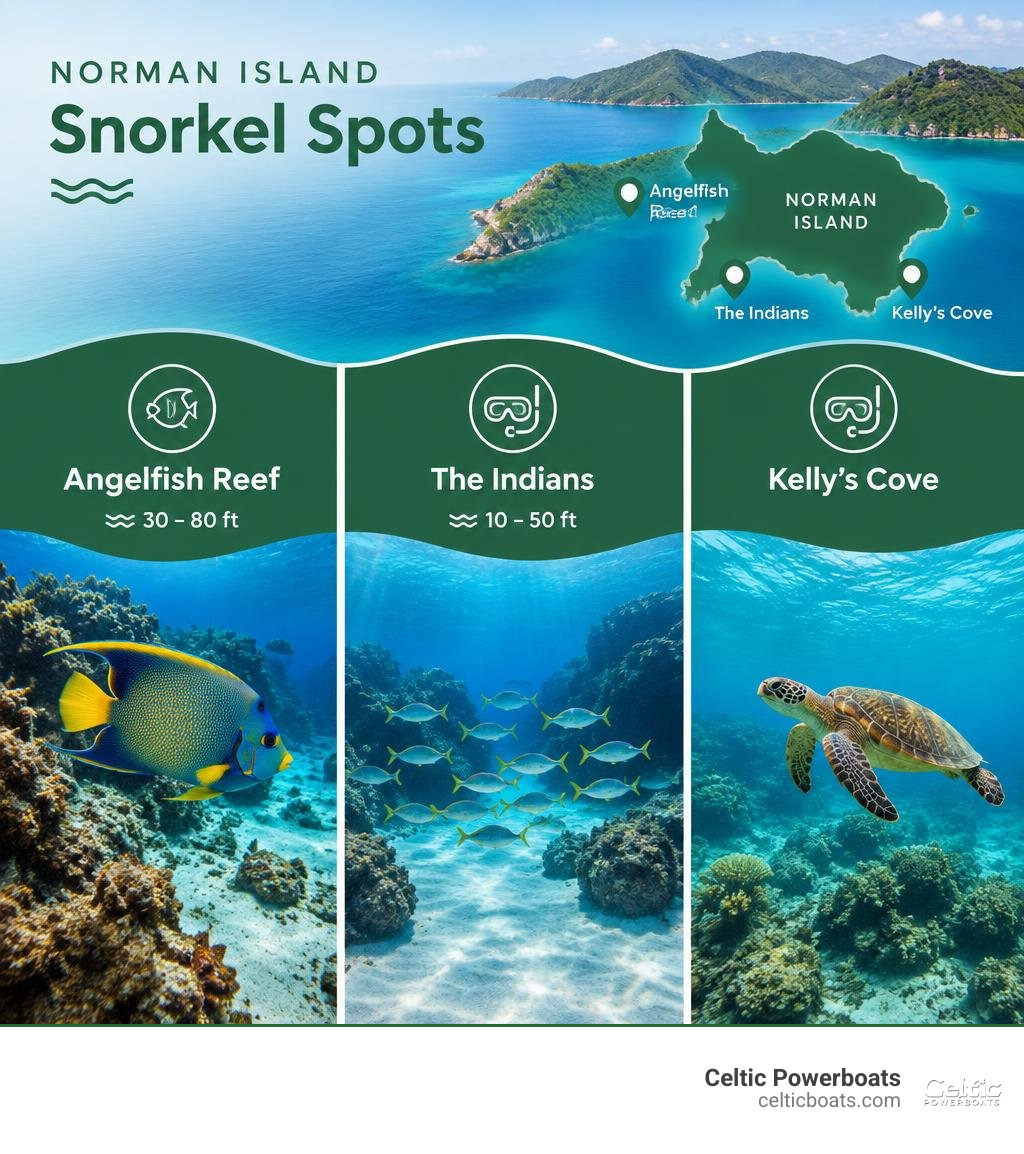
Diving and Snorkeling Angelfish Reef on Norman Island
Positioned off the rugged southwest tip of Norman Island at coordinates 18.31032° N, 64.62819° W, Norman Island Angelfish Reef marks the outer perimeter of the British Virgin Islands archipelago. Because there is no shoreline access or beach landing, this site is reachable strictly by boat.
Angelfish Reef faces directly into the open Caribbean Sea. Conditions here differ from those in the sheltered coves inside the Sir Francis Drake Channel. As noted in Zentacle’s Angelfish Reef overview, the site offers diving and snorkeling opportunities. Scuba divers and free divers can enjoy clear visibility, deep canyons, and broad reef views for photography, while surface snorkelers can peer down into sandy channels to watch open-water marine life cruising past.
Underwater Topography: Canyons, Ridges, and Sand Channels
The seafloor at Angelfish Reef has rocky canyons and elevated ridges that taper off into white-sand channels. Gorgonians—flexible corals such as sea fans and sea plumes—and other soft corals grow along the higher ridges, creating sheltered habitats for smaller marine life.
According to BVI Dive Map topography data, the reef has passages divers can swim through and small recesses formed by volcanic rock. Divers and snorkelers should keep in mind that the southern portion of the canyon system is directly exposed to open-ocean swells, which can push water back and forth along the narrow rock walls. The wider sand channels offer more open views of marine life resting on the seafloor.
Marine Life at Angelfish Reef on Norman Island
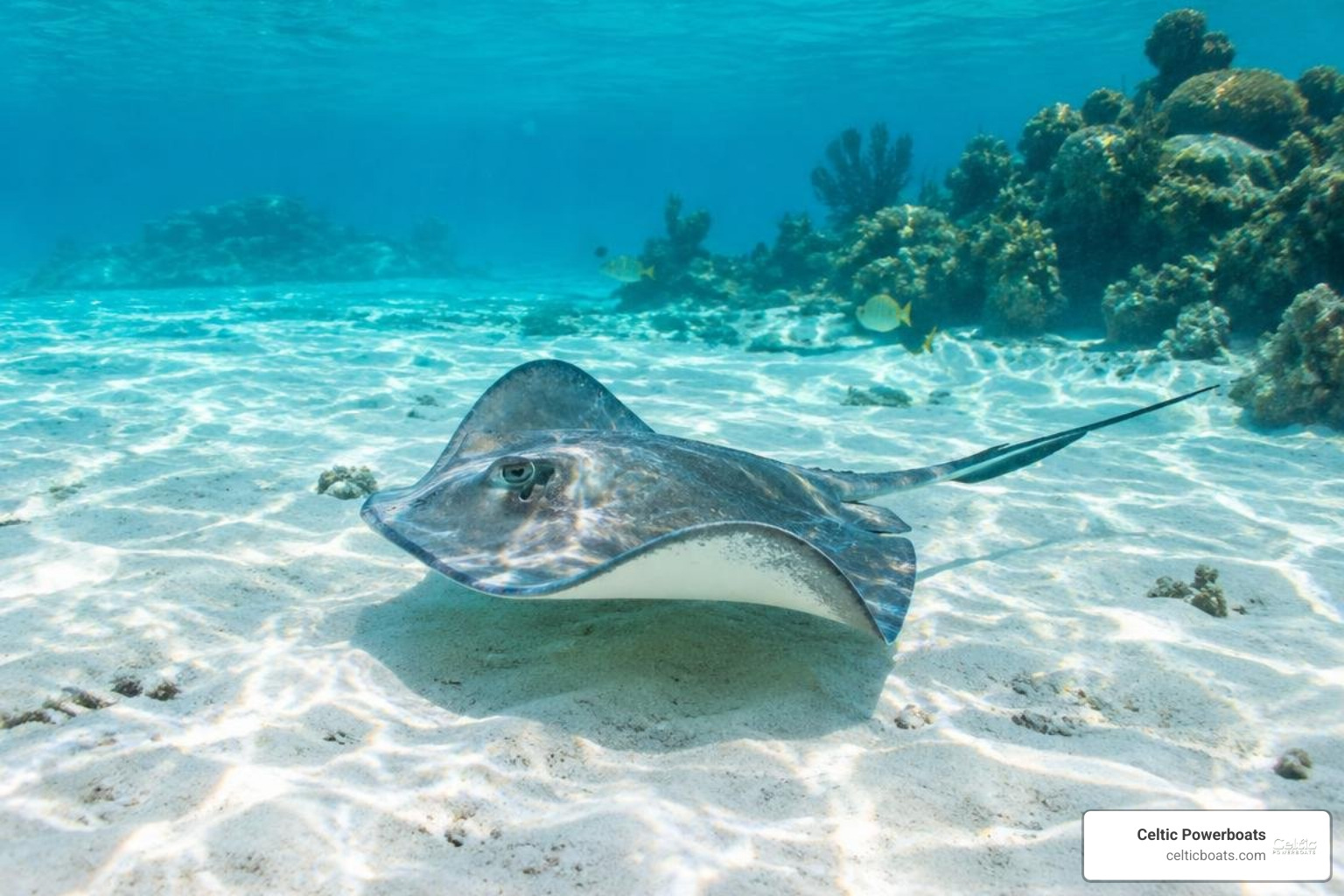
Photography by Tom Pinfold
The convergence of open ocean water and rocky structure supports high biodiversity, with over 27 recorded wildlife species documented across dive logs. User reports reflect substantial sightings across key species:
- Southern Stingrays: The most frequent sighting on the reef (47 recorded sightings), often seen foraging along the white-sand floor or partially burying themselves.
- Barracuda: Commonly spotted patrolling mid-water (30 recorded sightings).
- Nurse Sharks: Often found resting under rocky canyon ledges and overhangs (22 recorded sightings).
- Parrotfish & Angelfish: Abundant along the coral-encrusted ridges (22 parrotfish sightings), including French, queen, and gray angelfish feeding on sponges.
- Spotted Eagle Rays: Rays gliding through open water (11 recorded sightings).
- Eels: Moray eels hiding in rocky crevices alongside snake eels burrowed in the sandy channels.
- Sea Turtles: Green, hawksbill, and occasional leatherback turtles cruising the reef perimeter.
Divers interested in small marine life and night diving can look for orange ball anemones extending their translucent tentacles under lower ledges near the ocean floor, while cleaner shrimp and triplefin blennies tuck into small cracks in the rock.
Depth Profiles and Currents at Angelfish Reef on Norman Island
The depth profile at Angelfish Reef ranges between 30 and 80 feet (9 to 24 meters), with shallow rocky crests rising toward 16 feet (5 meters) and outer canyon drop-offs reaching roughly 90 feet (27 meters).
As outlined in the Angelfish Reef conditions guide, currents around the reef are generally low to moderate, but surface swells and surge can be pronounced due to southern sea exposure. For this reason, snorkeling at Angelfish Reef is best suited for confident, intermediate swimmers who are comfortable over deeper drop-offs. Beginner snorkelers are encouraged to use a snorkel vest for added buoyancy when drifting across the deeper ridges.
Kelly’s Cove: The Sheltered Alternative for Calm Snorkeling
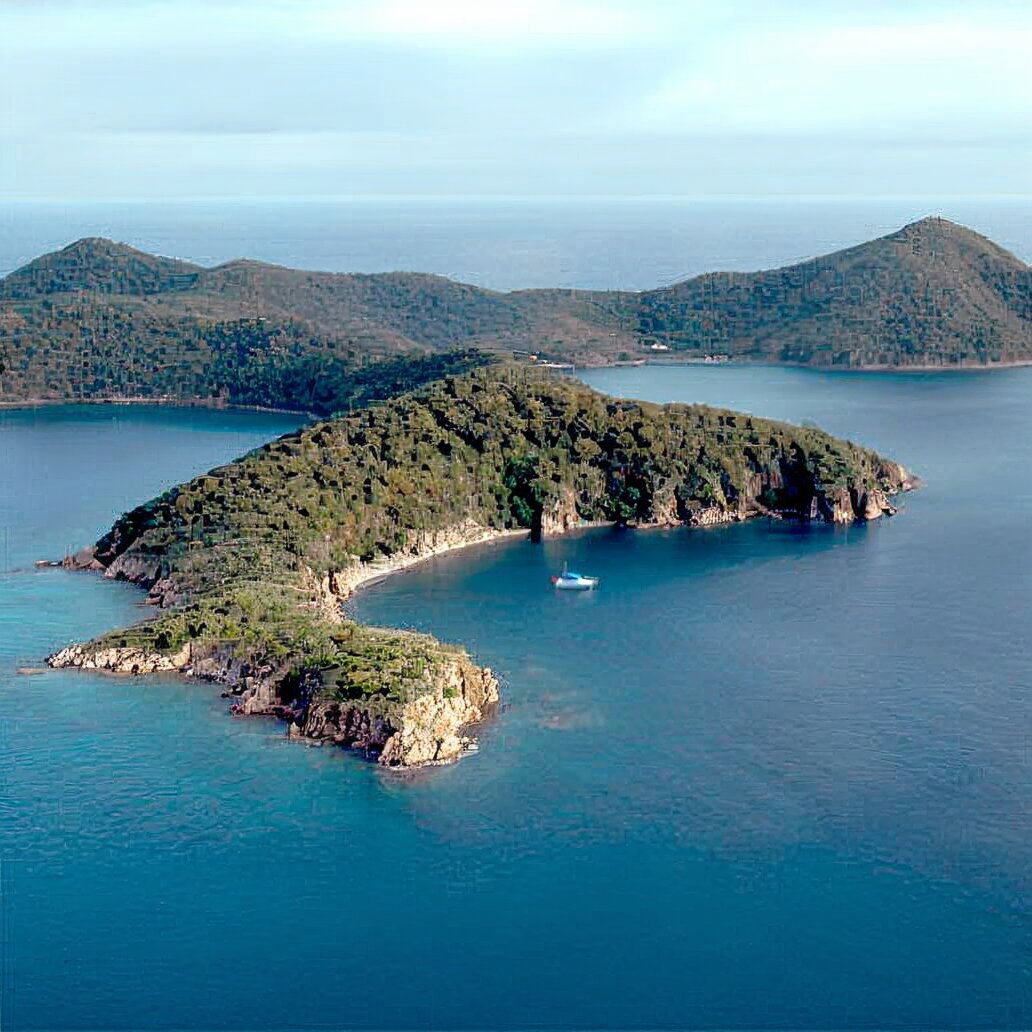
Photography by Tom Pinfold
For guests seeking calmer water and shallow coral formations, Norman Island Kellys Cove offers a more sheltered alternative on Norman Island.
Tucked along the northern side of the island, Kelly’s Cove offers shelter from southern ocean swells and prevailing trade winds. It can be an option for mixed groups, families with children, and swimmers who prefer less surface chop, when conditions allow.
Calm Waters and Protected Shorelines
The cliffs of Norman Island frame Kelly’s Cove, providing shelter from some wind and swell. When conditions are suitable, boats can use a National Parks Trust mooring buoy. Snorkelers can enter the water directly from the boat swim platform and explore along the shoreline cliffs, with swimming conditions and visibility depending on the day.
What to Spot Along Kelly’s Cove Reefs
The underwater landscape at Kelly’s Cove features shallow coral gardens composed of brain coral heads, sea fans, and branching hard corals starting in just 5 to 20 feet of water. Wildlife highlights in the cove include:
- Schools of vibrant blue tangs and yellowtail snappers grazing across coral heads
- Juvenile reef fish sheltering in shallow rock alcoves
- Foraging hawksbill sea turtles feeding on sponges along the cliff bases
- Camouflaged trumpetfish drifting vertically among sea rods
- Banded coral shrimp and arrow crabs nestled under shallow ledges
Comparing Norman Island Snorkel Spots: Beyond The Indians and The Caves
Many day trips heading to Norman Island focus primarily on Norman Island The Caves and the towering pinnacles of The Indians. While those signature sites offer impressive rock formations, they frequently attract high boat traffic, especially during peak midday hours when larger groups arrive from nearby anchorages like Norman Island The Bight.
Adding Angelfish Reef or Kelly’s Cove to your itinerary provides a quieter, unhurried experience.
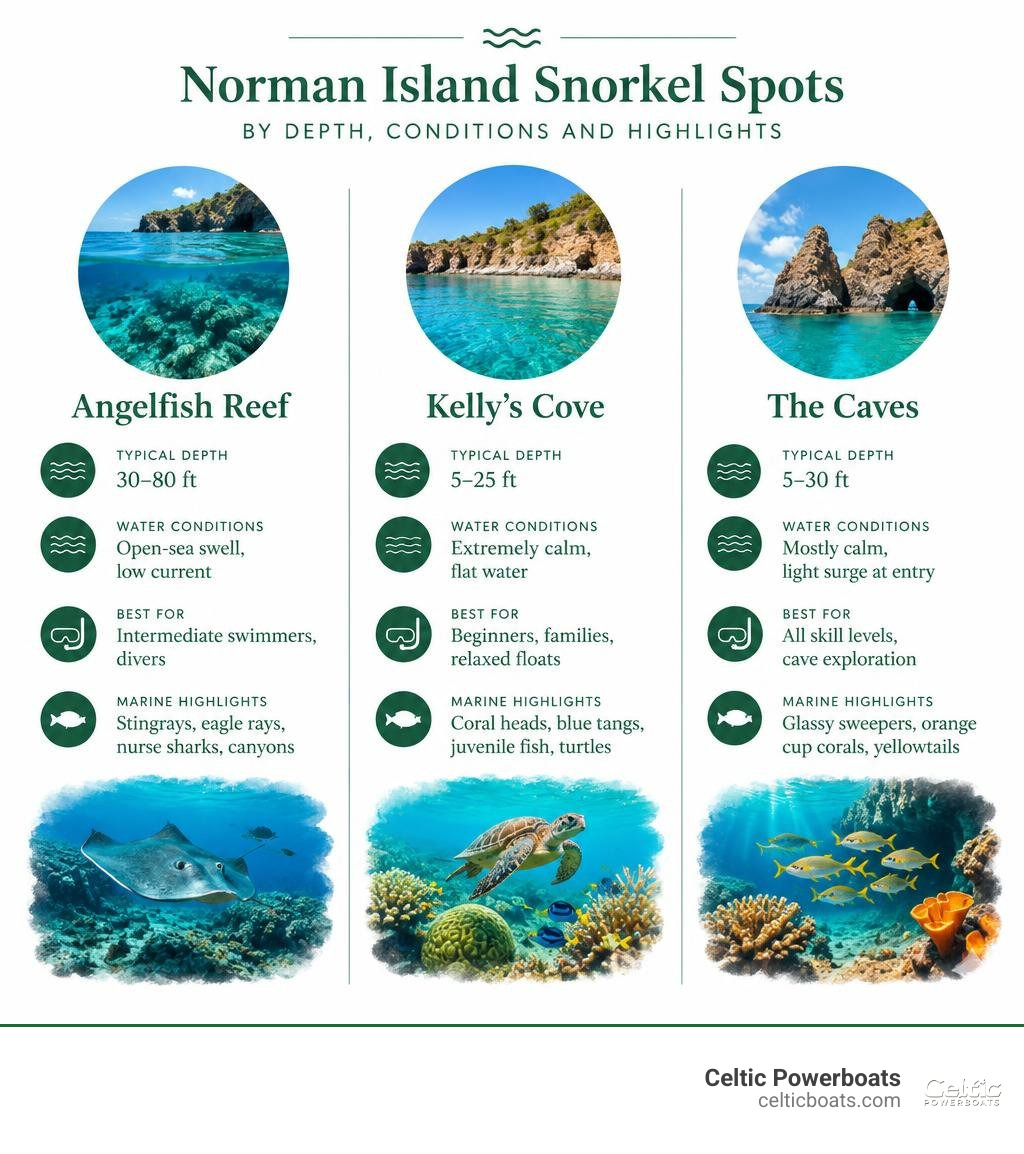
| Snorkel Site | Typical Depth | Water Conditions | Best For | Marine Highlights |
|---|---|---|---|---|
| Angelfish Reef | 30–80 ft | Open-sea swell, low current | Intermediate swimmers, divers | Stingrays, eagle rays, nurse sharks, canyons |
| Kelly’s Cove | 5–25 ft | Sheltered; conditions vary | Beginners, families, relaxed floats | Coral heads, blue tangs, juvenile fish, turtles |
| The Caves | 5–30 ft | Mostly calm, light surge at entry | All skill levels, cave exploration | Glassy sweepers, orange cup corals, yellowtails |
| The Indians | 10–50 ft | Moderate chop, light current | Confident snorkelers, varied depths | Rock pinnacles, gorgonians, parrotfish schools |
Planning Your Norman Island Day Trip: Logistics and Tips
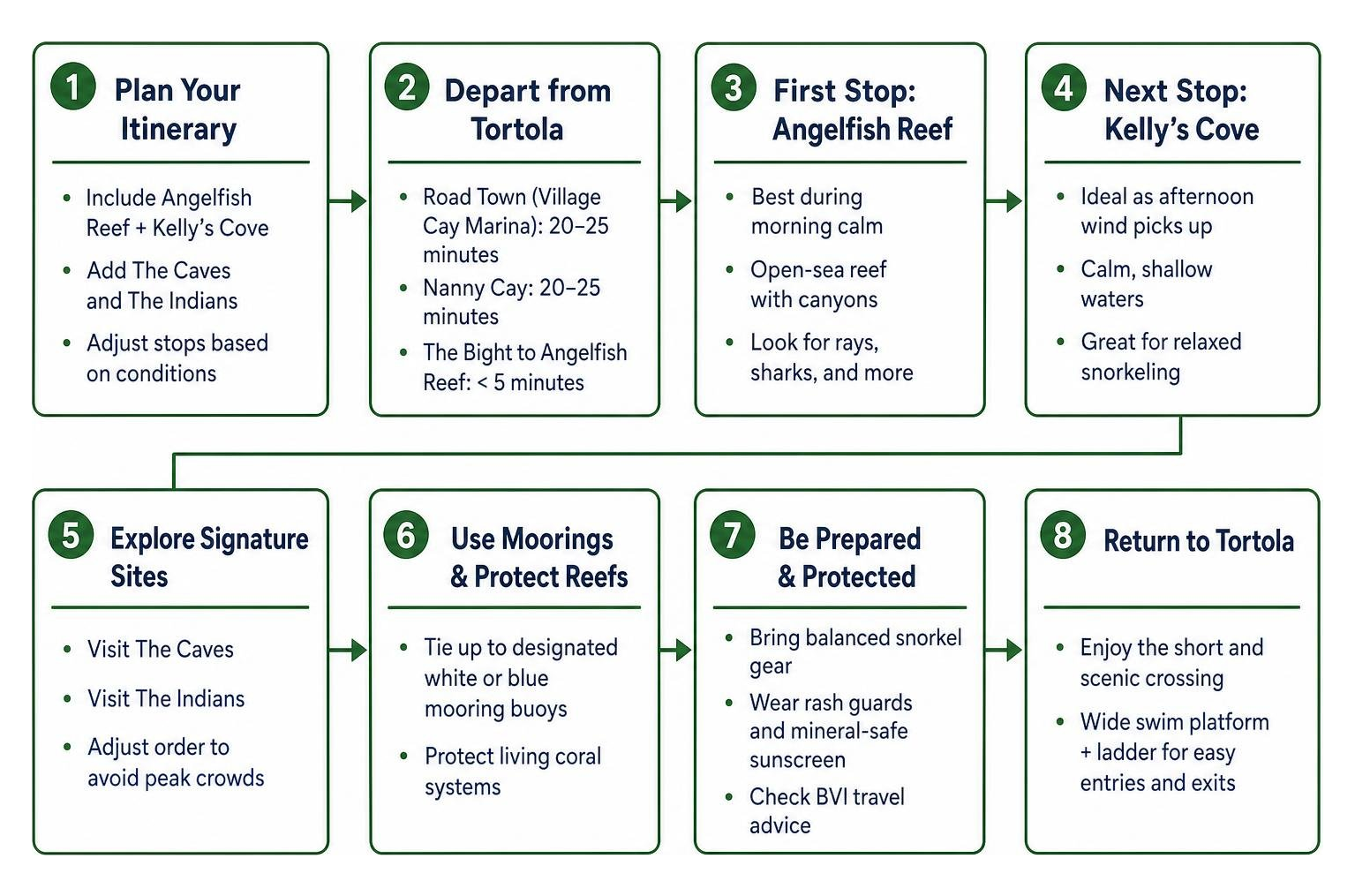
You can explore Norman Island’s reefs on a private day boat trip, such as the Pirate Booty Boat Day Norman Island Snorkel Tour. Your local captain can adjust the sequence of stops to suit the day’s conditions, considering exposed spots like Angelfish Reef when seas are calmer and Kelly’s Cove when more shelter is needed.
When preparing for an open-water reef stop, keep these practical tips in mind:
- Use National Parks Trust Moorings: Always tie up to designated white or blue mooring buoys to protect living coral systems on the seabed.
- Pack Balanced Snorkel Gear: Bring well-fitted masks, dry-top snorkels, and full-foot fins to handle deep-water entries.
- Wear Sun Protection: Rash guards and mineral-safe sunscreen protect against intense Caribbean sun without damaging marine habitats.
- Check Regional Travel Guidance: Consult official resources like British Virgin Islands travel advice for up-to-date entry requirements and seasonal guidelines.
Boat Access from Tortola
Private day trips reach Norman Island by boat from Tortola across the Sir Francis Drake Channel.
Because both Angelfish Reef and Kelly’s Cove have no shore docks or walk-on beaches, a boat with a wide swim platform and a sturdy boarding ladder is essential for easy water entries and exits.
Best Weather Conditions and Visibility
In the British Virgin Islands, water clarity routinely averages 60 to 100 feet. However, weather patterns dictate the best time to visit specific sites:
- Winter Months (December–March): Occasional northern ocean swells enter the territory. While northern swells leave Angelfish Reef largely protected on the south, strong easterly trade winds (“Christmas Winds”) can increase chop. Morning visits generally provide the flattest surface conditions.
- Summer Months (June–October): Lighter winds can bring calmer seas across the Sir Francis Drake Channel, but conditions at exposed Angelfish Reef still need to be checked that day.
- Tide & Sun Angle: Late morning to early afternoon provides the strongest overhead sunlight, penetrating deep into the 80-foot sand channels for underwater photography.
Frequently Asked Questions About Angelfish Reef and Kelly’s Cove
Is Angelfish Reef suitable for beginner snorkelers?
Angelfish Reef is better suited for intermediate to confident snorkelers because the seabed sits between 30 and 80 feet below the surface, and open-ocean swells can create noticeable surface movement. Beginners who want to explore Angelfish Reef should wear a flotation vest and stay close to the boat. Alternatively, beginner snorkelers and families often prefer Kelly’s Cove, where waters can be calmer and coral heads sit in shallow depths.
How do you get to Angelfish Reef and Kelly’s Cove?
Both sites are accessible strictly by boat. Visitors can book a private day boat trip departing from Tortola. Boats pick up designated National Parks Trust moorings near the reefs, allowing guests to step directly into the water from the stern swim platform.
What wildlife is most common at Angelfish Reef?
Southern stingrays are the most commonly documented species at Angelfish Reef, with dozens of recorded sightings along the sandy floor. Divers and snorkelers also regularly spot spotted eagle rays, nurse sharks resting under rock ledges, barracuda, moray eels, snake eels, sea turtles, and large schools of parrotfish and angelfish.
Conclusion
Angelfish Reef’s deeper ridges and Kelly’s Cove’s more sheltered, shallow waters offer different snorkeling options on Norman Island. Whether you want to scan deep sand channels for eagle rays or explore shallow coral gardens, choose your stops with the captain based on sea conditions and your group’s swimming comfort.
Celtic Powerboats offers private, customizable day-trip powerboat tours from Tortola aboard Celtic Pride, a vessel meeting U.S. Coast Guard safety standards with a strict maximum capacity of 12 guests.
Trips feature group pricing with one flat rate per trip—such as the 4-hour cruise half-day trip at $1,350 per trip, running round-trip from Village Cay and visiting Norman Island, Peter Island, or Jost Van Dyke only (illustrative math: $1,350 ÷ 6 guests ≈ $225 each).
Cruise ship guests meet in front of the Village Cay restaurant entrance on the Mill Mall side, approximately a 5-minute walk from the cruise pier; look for Celtic Pride. Return to the ship is guaranteed 30 minutes before all-aboard. Non-cruise full-day private trips finish with a sunset ride home.
To plan your custom Norman Island itinerary, explore the Going for Gold Half-Day Snorkel Tour or view all available private boat day trips and use Reserve or the contact form to plan your day on the water.